Wednesday, September 28, 2022

1894 Sioux Nation Treaty Council Statement to the UN Human Rights Council 51st Session (2022)


1894 Sioux Nation Treaty Council

Statement of Charmaine White Face

Spokesperson for the 1894 Sioux Nation Treaty Council

United Nations Human Rights Council
 51st Session - Geneva, Switzerland

Panel discussion on the negative impact of the legacies of colonialism on the enjoyment of Human Rights


YouTube:

    My name is Charmaine White Face.  I am the Spokesperson for the 1894 Sioux Nation Treaty Council.  We are located in the middle of North America. We are from the Great Sioux Nation and have an International Treaty with the United States.  However, the U.S placed us in Prisoner-of-war camps which they call American Indian Reservations, and the US is illegally occupying our Treaty territory without our consent.


    Thank you for approving Resolution 48/7 regarding the Negative Impacts of Colonialism.  Approving a Resolution recognizing that there are still dehumanizing effects of colonialism  in the world is a first step in healing those harmful effects for millions of Indigenous Peoples and Nations.

 
    To fully activate Resolution 48/7, this Human Rights Council needs to recommend in your report to the General Assembly that all Indigenous Nations that have International treaties or agreements with colonizing governments are automatically placed on the Decolonization List. Resolution 48/7 was meant to truly eliminate not enable colonization.
 

     In addition, this Council must offer to all Indigenous Nations and Peoples including those without treaties, or agreements but who suffer oppression by colonizing governments, the opportunity of participating in the process of Decolonization.  Without that opportunity, the Human Right to Self Determination of Indigenous Peoples and Nations is denied and colonialism condoned. 


    Mitakuye oyasin (For all my relations),  Thank you.


 **************

 June 30, 2022

1894 Sioux Nation Treaty Council: 

Alternative Report to UN Committee for the Elimination of Racial Discrimination 

The Sioux Nation Treaty Council has been sending representatives to attend various meetings at the United Nations since 1982 after exhausting all remedies in the American courts.  The main purpose has always been to find a resolution of this International Treaty which would mean the 1868 Fort Laramie Treaty would be enforced, the land title returned to the Sioux Nation, and the USA, with rare exceptions, removed from the Treaty territory.  The UN Decolonization process could be a way to stop the forced assimilation, racism, and bigotry that has been inflicting drastic harm to the Sioux people for more than 150 years.      


******************

1894 Sioux Nation Treaty Council - Charmaine White Face

YouTube:
1894 Sioux Nation Treaty Council 

Charmaine White Face

presentation at the

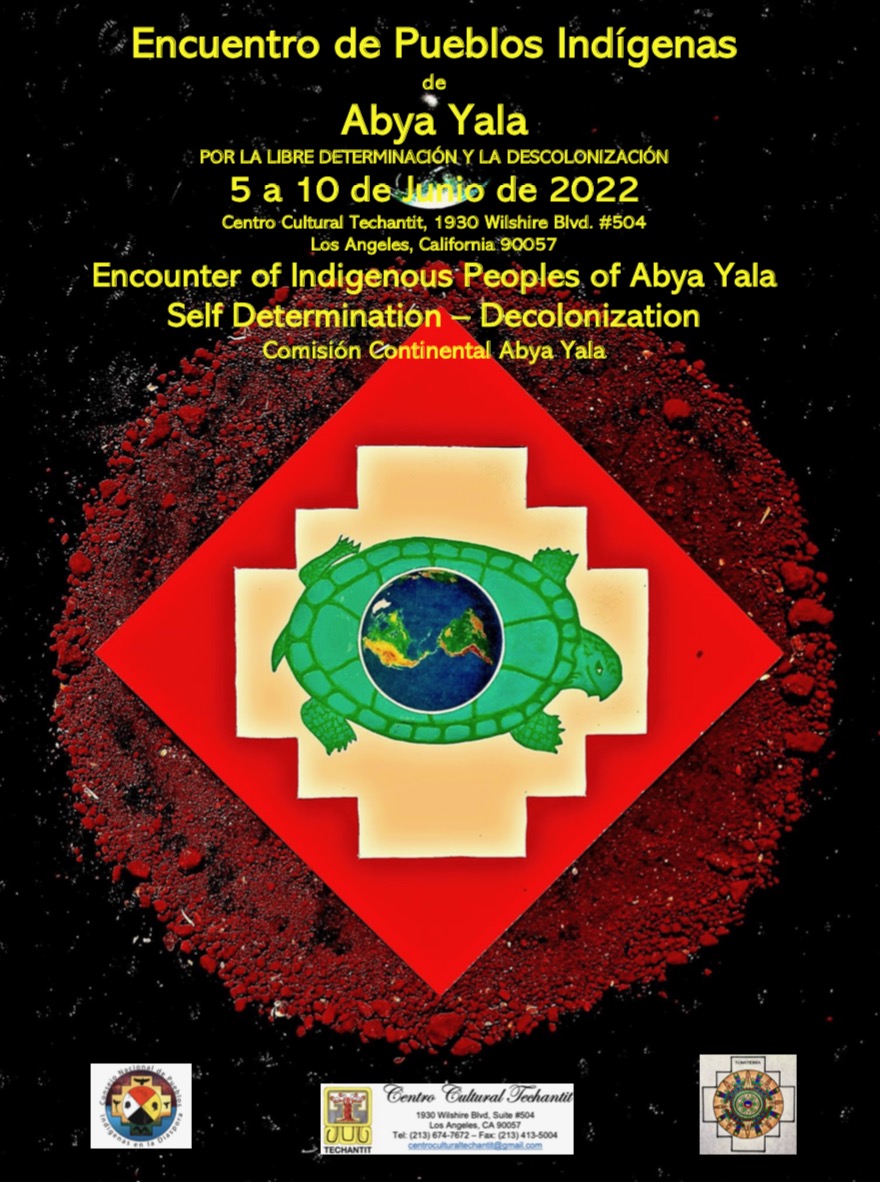
Encounter of Indigenous Peoples of Abya Yala
for

Self Determination – Decolonization 

June 7, 2022

Continental Commission Abya Yala 


OFFICE OF THE HIGH COMMISSIONER FOR HUMAN RIGHTS

1994/45.  Draft United Nations declaration on the rights of

Indigenous Peoples

The Sub-Commission on Prevention of Discrimination and Protection of Minorities


Article 36

(Original)


Indigenous peoples have the right to the recognition, observance and enforcement of treaties, agreements and other constructive arrangements concluded with States or their successors, according to their original spirit and intent, and to have States honour and respect such treaties, agreements and other constructive arrangements.  Conflicts and disputes which cannot otherwise be settled should be submitted to competent international bodies agreed to by all parties concerned.

Introduction to the Spanish translation

January 2021


The narrative and comparative analysis in this fundamental study of the UN Declaration on the Rights of Indigenous Peoples by Charmaine White Face, provides critical context for the battle for self-determination that the Original Nations of Indigenous Peoples face today in the global arena of shifting geopolitical powers. The original English language edition of this book was published in 2013.  Now, with this Spanish translation being made available to the leadership of the Indigenous Peoples of the world at a climactic turning point in the history of world affairs, the Mandate of the Indigenous Peoples emerges once again in power and purpose with a message for all humanity.   


The final text of the Declaration as adopted by the UN General Assembly on September 13, 2007, was preceded by two other versions.


In 1994 the Sub-Commission on the Prevention of Discrimination and Protection of Minorities approved the Original Text of the declaration which was the product of many years of deliberation that allowed for a degree of meaningful and decisive participation of Indigenous Peoples from around the world.


In 2006, the UN Human Rights Council adopted a version of the declaration submitted by an individual official of the UN system, the Chairman-Rapporteur of the Working Group on the Draft Declaration, Sr. Luis Enrique Chavez.  After the African Union inserted changes to this version, the UN General Assembly then included nine additional changes in the final version of the text which was approved in 2007.


The presentation of the version as adopted by the General Assembly was challenged on November 29, 2004 by a five-day prayer fast/hunger strike by six indigenous delegates to the Working Group on the Draft Declaration at UN headquarters in Geneva, Switzerland.  With support and solidarity of Indigenous Peoples from around the world, the demand was that the Original Text as approved by the Sub-Commission on the Prevention of Discrimination and Protection of Minorities be recognized as the only legitimate version of the declaration that would be advanced on the floor of the UN General Assembly.  With assurances from representatives of the UN Commission on Human Rights (also called the CHR) that if no consensus could be achieved by the end of the 2004 session of the Working Group, the only version of the declaration that would be submitted to the full Commission would be the Sub-Commission Text as approved in 1994, the hunger strike/prayer fast came to an end.


This agreement was subsequently violated, and then betrayed.


United Nations Human Rights Council

Panel discussion on the negative impact of the legacies of colonialism

Wednesday September 28, 2022

51st  session of the Human Rights Council

Panel discussion on the negative impact of the legacies of colonialism on the enjoyment of human rights

Concept note (draft as of 29 August 2022)

Date and venue:

Wednesday, 28 September 2022, 4 to 6 p.m. (UTC+2)

Room XX, Palais des Nations, Geneva, and online platform (Zoom)

(will be broadcast live and archived on https://media.un.org/en/webtv)


Outcome: 

A summary report on the panel discussion will be prepared by the Office of the United Nations High Commissioner for Human Rights and submitted, including in an accessible format, to the Council at its fifty-fourth session (September 2023). The panel discussion will contribute to renewing and strengthening commitments to effectively address the negative impact of the legacies of colonialism on the enjoyment of human rights, and contribute to the implementation of the Fourth International Decade for the Eradication of Colonialism (2021-2030) designated by the General Assembly.


Mandate:

In its resolution 48/7 on the negative impact of the legacies of colonialism on the enjoyment of human rights, the Human Rights Council decided to convene a panel discussion at its fifty-first session to identify challenges in addressing the negative impact of the legacies of colonialism on human rights, and to discuss ways forward.


Format:

The panel discussion will be limited to two hours. The opening statement and initial presentations by the panellists will be followed by a two-part interactive discussion and conclusions from the panellists. A maximum of one hour will be set aside for the podium, which will cover the opening statements, panellists’ presentations and their responses to questions and concluding remarks. The remaining hour will be reserved for two segments of interventions from the floor, with each segment consisting of interventions from 12 States and observers, 1 national human rights institution and 2 non-governmental organizations. Each speaker will have two minutes to raise issues and to ask panellists questions. Panellists will respond to questions and comments during the remaining time available.


The list of speakers for the discussion will be established through the online inscription system and, as per practice, statements by high-level dignitaries and groups of States will be moved to the beginning of the list. Delegates who have not been able to take the floor due to time constraints will be able to upload their statements on the online system to be posted on the HRC Extranet. Interpretation will be provided in the six United Nations official languages (Arabic, Chinese, English, French, Russian and Spanish).


NTCP: New Technologies for Corporate Privilege and the

Territorial Integrity of Mother Earth


"In order to fulfil their obligations to guarantee Indigenous Peoples’ right of self-determination and permanent sovereignty over our lands, territories, resources, air, ice, oceans and waters, mountains and forests, we recommend that States, as a matter of urgency, establish effective mechanisms through agreements reached with the Indigenous Peoples concerned, to effectively implement the aforementioned rights consistent with State’s obligations under international law, the UN Charter, the Declaration and Treaties and agreements concluded with Indigenous Peoples and Nations;" 

 ALTA OUTCOME DOCUMENT (2013)


What is in question is not just the inherent right of Indigenous Peoples to free, prior, and informed consent in a culturally appropriate manner regarding projects that impact their territories and human rights. Nor is this issue only limited to the specific treaty concerns of specific Indigenous treaty nations with specific states.


What is in question is the need for the international legal system of the planet to escape the conceptual constraints and the ethical void of the colonial legacy which gave origin to the present international framework, in open violation of the right of self-determination of the Indigenous Peoples, equal to all other peoples. Such a geopolitical trajectory could provide an effective strategic repositioning of global ecological concerns vis-à-vis the fractured interests of the states and the corresponding geopolitical blocs of power and competition. A multilateral world that integrated the recognition of Indigenous Nationhood, where the rights and responsibilities of the Original Nations of Indigenous Peoples of Mother Earth are acknowledged and respected could provide a possible alternative to the self-destructive modus operandi of the present international regimes of competition, consumption, and finally the fatal degradation of the biosphere.


Conclusion


In consideration of the preceding, we now submit:


On March 20, 2022, a joint Declaration by a Western Hemisphere Alliance of Original Nations of Indigenous Peoples that includes the 1894 Sioux Nation Treaty Council, the Western Shoshone Defense Project, the Consejo de Todas las Tierras Mapuche, and TONATIERRA was submitted to the United Nations Secretary General, the High Commissioner for Human Rights, the Human Rights Council, and the Committee on the Elimination of Racial Discrimination.


This declaration invoked the principles of UNHRC Resolution 48/7 Negative impact of the legacies of colonialism and called upon the UN system to address the institutionalized and systemic legacies of discrimination and colonialism within the UN system.

(A/HRC/RES/48/7 Resolution adopted by the Human Rights Council on 8 October 2021)


1.   Stresses the utmost importance of eradicating colonialism and addressing the negative impact of the legacies of colonialism on the enjoyment of human rights;


2.   Calls for Member States, relevant United Nations bodies, agencies and other relevant stakeholders to take concrete steps to address the negative impact of the legacies of colonialism on the enjoyment of human rights;


Without the international recognition, respect, guarantees to honor and mechanisms of effective enforcement of the Treaties between the states and the Original Nations of Indigenous Peoples within the international legal system of the UN member states, the concept of free, prior, and informed consent for Indigenous Peoples is reduced from an international standard and principle of law to a political phrase with significance derived from the domestic interpretations and bureaucratic policies of the individual states. 


In terms of the discussion and debate over NTCP, all of the strategies and plans to address documented threats to the human rights of Indigenous Peoples exacerbated by NTCP projects will be devoid of justice, and instead serve as instrumentalities of even deeper subjugation and colonization in particular for the Treaty Nations.


Therefore, in order to advance a substantive discussion on the processes presented by United Nations Human Rights Council Advisory Committee per UN HRC Resolution 48/14, we respectfully call for the inclusion of the UN Study on Treaties, Agreements, and Constructive Arrangements concluded by Special Rapporteur Miguel Alfonso Martinez in 1999 (E/CN.4/Sub.2/1999/20) as fundamental reference to contextualize the issues being brought forward.


“We, Original Nations and Indigenous Peoples of Mother Earth, assert our right to address all forms and manifestations of colonialism, foreign occupation, including all scourges of racism and racial discrimination, apartheid, crimes against humanity, and genocide on an equal basis to all other peoples and nations in accordance with the United Nations Charter.”


Joint Declaration from the following Indigenous Nations and Peoples to the United Nations Secretary General, High Commissioner for Human Rights, Human Rights Council, Committee on the Elimination of Racial Discrimination, and the

Expert Mechanism on the Rights of Indigenous Peoples

March 20, 2022


Signed:


1894 Sioux Nation Treaty Council

Consejo de Todas las Tierras Mapuche

Western Shoshone Defense Project

TONATIERRA

www.tonatierra.org

chantlaca@tonatierra.org

Thursday, September 8, 2022

1894 Sioux Nation Treaty Council - Charmaine White Face

YouTube:
1894 Sioux Nation Treaty Council 

Charmaine White Face

presentation at the

Encounter of Indigenous Peoples of Abya Yala
for

Self Determination – Decolonization 

June 7, 2022

Continental Commission Abya Yala 


OFFICE OF THE HIGH COMMISSIONER FOR HUMAN RIGHTS

1994/45.  Draft United Nations declaration on the rights of

Indigenous Peoples

The Sub-Commission on Prevention of Discrimination and Protection of Minorities


Article 36

(Original)


Indigenous peoples have the right to the recognition, observance and enforcement of treaties, agreements and other constructive arrangements concluded with States or their successors, according to their original spirit and intent, and to have States honour and respect such treaties, agreements and other constructive arrangements.  Conflicts and disputes which cannot otherwise be settled should be submitted to competent international bodies agreed to by all parties concerned.

Introduction to the Spanish translation

January 2021


The narrative and comparative analysis in this fundamental study of the UN Declaration on the Rights of Indigenous Peoples by Charmaine White Face, provides critical context for the battle for self-determination that the Original Nations of Indigenous Peoples face today in the global arena of shifting geopolitical powers. The original English language edition of this book was published in 2013.  Now, with this Spanish translation being made available to the leadership of the Indigenous Peoples of the world at a climactic turning point in the history of world affairs, the Mandate of the Indigenous Peoples emerges once again in power and purpose with a message for all humanity.   


The final text of the Declaration as adopted by the UN General Assembly on September 13, 2007, was preceded by two other versions.


In 1994 the Sub-Commission on the Prevention of Discrimination and Protection of Minorities approved the Original Text of the declaration which was the product of many years of deliberation that allowed for a degree of meaningful and decisive participation of Indigenous Peoples from around the world.


In 2006, the UN Human Rights Council adopted a version of the declaration submitted by an individual official of the UN system, the Chairman-Rapporteur of the Working Group on the Draft Declaration, Sr. Luis Enrique Chavez.  After the African Union inserted changes to this version, the UN General Assembly then included nine additional changes in the final version of the text which was approved in 2007.


The presentation of the version as adopted by the General Assembly was challenged on November 29, 2004 by a five-day prayer fast/hunger strike by six indigenous delegates to the Working Group on the Draft Declaration at UN headquarters in Geneva, Switzerland.  With support and solidarity of Indigenous Peoples from around the world, the demand was that the Original Text as approved by the Sub-Commission on the Prevention of Discrimination and Protection of Minorities be recognized as the only legitimate version of the declaration that would be advanced on the floor of the UN General Assembly.  With assurances from representatives of the UN Commission on Human Rights (also called the CHR) that if no consensus could be achieved by the end of the 2004 session of the Working Group, the only version of the declaration that would be submitted to the full Commission would be the Sub-Commission Text as approved in 1994, the hunger strike/prayer fast came to an end.


This agreement was subsequently violated, and then betrayed.


United Nations Human Rights Council

Panel discussion on the negative impact of the legacies of colonialism

Wednesday September 28, 2022

51st  session of the Human Rights Council

Panel discussion on the negative impact of the legacies of colonialism on the enjoyment of human rights

Concept note (draft as of 29 August 2022)

Date and venue:

Wednesday, 28 September 2022, 4 to 6 p.m. (UTC+2)

Room XX, Palais des Nations, Geneva, and online platform (Zoom)

(will be broadcast live and archived on https://media.un.org/en/webtv)


Outcome: 

A summary report on the panel discussion will be prepared by the Office of the United Nations High Commissioner for Human Rights and submitted, including in an accessible format, to the Council at its fifty-fourth session (September 2023). The panel discussion will contribute to renewing and strengthening commitments to effectively address the negative impact of the legacies of colonialism on the enjoyment of human rights, and contribute to the implementation of the Fourth International Decade for the Eradication of Colonialism (2021-2030) designated by the General Assembly.


Mandate:

In its resolution 48/7 on the negative impact of the legacies of colonialism on the enjoyment of human rights, the Human Rights Council decided to convene a panel discussion at its fifty-first session to identify challenges in addressing the negative impact of the legacies of colonialism on human rights, and to discuss ways forward.


Format:

The panel discussion will be limited to two hours. The opening statement and initial presentations by the panellists will be followed by a two-part interactive discussion and conclusions from the panellists. A maximum of one hour will be set aside for the podium, which will cover the opening statements, panellists’ presentations and their responses to questions and concluding remarks. The remaining hour will be reserved for two segments of interventions from the floor, with each segment consisting of interventions from 12 States and observers, 1 national human rights institution and 2 non-governmental organizations. Each speaker will have two minutes to raise issues and to ask panellists questions. Panellists will respond to questions and comments during the remaining time available.


The list of speakers for the discussion will be established through the online inscription system and, as per practice, statements by high-level dignitaries and groups of States will be moved to the beginning of the list. Delegates who have not been able to take the floor due to time constraints will be able to upload their statements on the online system to be posted on the HRC Extranet. Interpretation will be provided in the six United Nations official languages (Arabic, Chinese, English, French, Russian and Spanish).


NTCP: New Technologies for Corporate Privilege and the

Territorial Integrity of Mother Earth


"In order to fulfil their obligations to guarantee Indigenous Peoples’ right of self-determination and permanent sovereignty over our lands, territories, resources, air, ice, oceans and waters, mountains and forests, we recommend that States, as a matter of urgency, establish effective mechanisms through agreements reached with the Indigenous Peoples concerned, to effectively implement the aforementioned rights consistent with State’s obligations under international law, the UN Charter, the Declaration and Treaties and agreements concluded with Indigenous Peoples and Nations;" 

 ALTA OUTCOME DOCUMENT (2013)


What is in question is not just the inherent right of Indigenous Peoples to free, prior, and informed consent in a culturally appropriate manner regarding projects that impact their territories and human rights. Nor is this issue only limited to the specific treaty concerns of specific Indigenous treaty nations with specific states.


What is in question is the need for the international legal system of the planet to escape the conceptual constraints and the ethical void of the colonial legacy which gave origin to the present international framework, in open violation of the right of self-determination of the Indigenous Peoples, equal to all other peoples. Such a geopolitical trajectory could provide an effective strategic repositioning of global ecological concerns vis-à-vis the fractured interests of the states and the corresponding geopolitical blocs of power and competition. A multilateral world that integrated the recognition of Indigenous Nationhood, where the rights and responsibilities of the Original Nations of Indigenous Peoples of Mother Earth are acknowledged and respected could provide a possible alternative to the self-destructive modus operandi of the present international regimes of competition, consumption, and finally the fatal degradation of the biosphere.


Conclusion


In consideration of the preceding, we now submit:


On March 20, 2022, a joint Declaration by a Western Hemisphere Alliance of Original Nations of Indigenous Peoples that includes the 1894 Sioux Nation Treaty Council, the Western Shoshone Defense Project, the Consejo de Todas las Tierras Mapuche, and TONATIERRA was submitted to the United Nations Secretary General, the High Commissioner for Human Rights, the Human Rights Council, and the Committee on the Elimination of Racial Discrimination.


This declaration invoked the principles of UNHRC Resolution 48/7 Negative impact of the legacies of colonialism and called upon the UN system to address the institutionalized and systemic legacies of discrimination and colonialism within the UN system.

(A/HRC/RES/48/7 Resolution adopted by the Human Rights Council on 8 October 2021)


1.   Stresses the utmost importance of eradicating colonialism and addressing the negative impact of the legacies of colonialism on the enjoyment of human rights;


2.   Calls for Member States, relevant United Nations bodies, agencies and other relevant stakeholders to take concrete steps to address the negative impact of the legacies of colonialism on the enjoyment of human rights;


Without the international recognition, respect, guarantees to honor and mechanisms of effective enforcement of the Treaties between the states and the Original Nations of Indigenous Peoples within the international legal system of the UN member states, the concept of free, prior, and informed consent for Indigenous Peoples is reduced from an international standard and principle of law to a political phrase with significance derived from the domestic interpretations and bureaucratic policies of the individual states. 


In terms of the discussion and debate over NTCP, all of the strategies and plans to address documented threats to the human rights of Indigenous Peoples exacerbated by NTCP projects will be devoid of justice, and instead serve as instrumentalities of even deeper subjugation and colonization in particular for the Treaty Nations.


Therefore, in order to advance a substantive discussion on the processes presented by United Nations Human Rights Council Advisory Committee per UN HRC Resolution 48/14, we respectfully call for the inclusion of the UN Study on Treaties, Agreements, and Constructive Arrangements concluded by Special Rapporteur Miguel Alfonso Martinez in 1999 (E/CN.4/Sub.2/1999/20) as fundamental reference to contextualize the issues being brought forward.


“We, Original Nations and Indigenous Peoples of Mother Earth, assert our right to address all forms and manifestations of colonialism, foreign occupation, including all scourges of racism and racial discrimination, apartheid, crimes against humanity, and genocide on an equal basis to all other peoples and nations in accordance with the United Nations Charter.”


Joint Declaration from the following Indigenous Nations and Peoples to the United Nations Secretary General, High Commissioner for Human Rights, Human Rights Council, Committee on the Elimination of Racial Discrimination, and the

Expert Mechanism on the Rights of Indigenous Peoples

March 20, 2022


Signed:


1894 Sioux Nation Treaty Council

Consejo de Todas las Tierras Mapuche

Western Shoshone Defense Project

TONATIERRA

www.tonatierra.org

chantlaca@tonatierra.org


Wednesday, August 31, 2022

UNHRC Panel discussion on the negative impact of the legacies of colonialism - Wednesday September 28, 2022

51st  session of the Human Rights Council

Panel discussion on the negative impact of the legacies of colonialism on the enjoyment of human rights

Concept note (draft as of 29 August 2022)


Date and venue:

Wednesday, 28 September 2022, 4 to 6 p.m. (UTC+2)

Room XX, Palais des Nations, Geneva, and online platform (Zoom)

(will be broadcast live and archived on https://media.un.org/en/webtv)


Objectives: 


The panel discussion aims to:

•   Identify the challenges, concrete steps and measures to address the negative impact of the legacies of colonialism on human rights;

•   Examine the various manifestations of the negative impact of the legacies of colonialism on the enjoyment of human rights;

•   Consider what role the Council, Member States, relevant United Nations bodies and agencies, international organizations, UN human rights mechanisms, national human rights institutions, non-governmental organizations and other relevant stakeholders can play.


Chair:

•  H.E. Mr. Federico Villegas, President of the Human Rights Council


Opening statements:

•  Senior OHCHR representative (TBD)

•  Ms. Verene Shepherd, Chair of the Committee on the Elimination of Racial Discrimination


Moderator 

•   Ms. E. Tendayi Achiume, Special Rapporteur on contemporary forms of racism, racial discrimination and related intolerance (video message)


Panellists:

•   Mr. José Francisco Calí Tzay, Special Rapporteur on the rights of indigenous peoples 

•   Mr. Mihir Kanade, Chair of the Expert Mechanism on the Right to Development (video message) 

•   Mr. Fabian Salvioli, Special Rapporteur on the promotion of truth, justice, reparation and guarantees of non-recurrence (video message)


Outcome:  


A summary report on the panel discussion will be prepared by the Office of the United Nations High Commissioner for Human Rights and submitted, including in an accessible format, to the Council at its fifty-fourth session (September 2023). The panel discussion will contribute to renewing and strengthening commitments to effectively address the negative impact of the legacies of colonialism on the enjoyment of human rights, and contribute to the implementation of the Fourth International Decade for the Eradication of Colonialism (2021-2030) designated by the General Assembly.


Mandate:


In its resolution 48/7 on the negative impact of the legacies of colonialism on the enjoyment of human rights, the Human Rights Council decided to convene a panel discussion at its fifty-first session to identify challenges in addressing the negative impact of the legacies of colonialism on human rights, and to discuss ways forward.


Format:


The panel discussion will be limited to two hours. The opening statement and initial presentations by the panellists will be followed by a two-part interactive discussion and conclusions from the panellists. A maximum of one hour will be set aside for the podium, which will cover the opening statements, panellists’ presentations and their responses to questions and concluding remarks. The remaining hour will be reserved for two segments of interventions from the floor, with each segment consisting of interventions from 12 States and observers, 1 national human rights institution and 2 non-governmental organizations. Each speaker will have two minutes to raise issues and to ask panellists questions. Panellists will respond to questions and comments during the remaining time available.


The list of speakers for the discussion will be established through the online inscription system and, as per practice, statements by high-level dignitaries and groups of States will be moved to the beginning of the list. Delegates who have not been able to take the floor due to time constraints will be able to upload their statements on the online system to be posted on the HRC Extranet. Interpretation will be provided in the six United Nations official languages (Arabic, Chinese, English, French, Russian and Spanish).


Accessibility:


In an effort to render the Human Rights Council more accessible to persons with disabilities and to promote their full participation in the work of the Council on an equal basis with others, this panel discussion will be made accessible. International sign interpretation and real-time captioning will be provided and webcast during the debate. During the event itself, participants can access live English captioning on the StreamText web page (https://www.streamtext.net/player?event=CFI-UNOG). Hearing loops are available for collection from the Secretariat desk. Oral statements may be embossed in Braille from any of the six official languages of the United Nations, upon request and following the procedure described in The accessibility guide to the Human Rights Council for persons with disabilities (https://www.ohchr.org/en/hr-bodies/hrc/accessibility).


Background:

In its resolution 48/7, the Council stressed the utmost importance of eradicating colonialism and addressing the negative impact of the legacies of colonialism on the enjoyment of human rights. It recognized with concern that the legacies of colonialism, in all their manifestations, such as economic exploitation, inequality within and among States, systemic racism, violations of indigenous peoples’ rights, contemporary form of slavery and damage to cultural heritage, have a negative impact on the effective enjoyment of all human rights. The Council recognized that colonialism has led to racism, racial discrimination, xenophobia and related intolerance, and that Africans and people of African descent, Asians and people of Asian descent and indigenous peoples were victims of colonialism and continue to be victims of its consequences. It further expressed deep concern at the violations of human rights of indigenous peoples committed in colonial contexts, and stressed the need for States to take all measures necessary to protect rights and ensure the safety of indigenous peoples, especially indigenous women and children, to restore truth and justice and to hold perpetrators accountable.


In the Durban Declaration and Programme of Action, Member States recognized that colonialism has led to racism, racial discrimination, xenophobia and related intolerance and that Africans and people of African descent, Asians and people of Asian descent and indigenous peoples were victims of colonialism and continue to be victims of its consequences. The International Convention on the Elimination of All Forms of Racial Discrimination condemns colonialism and all practices of segregation and discrimination associated therewith, in whatever form and wherever they exist.


In her 2021 report on racial justice and equality (A/HRC/47/53 and A/HRC/47/CRP.1), the High Commissioner pointed out the urgency of dismantling systemic racism against Africans and people of African descent and acknowledged that systemic racism is frequently rooted in histories and legacies of enslavement, the transatlantic trade in enslaved Africans and colonialism. Recognizing the imperative for action, in her “Four-point Agenda towards Transformative Change for Racial Justice and Equality” the High Commissioner highlighted the urgency of confronting past legacies of enslavement, the transatlantic trade in enslaved Africans and colonialism and delivering reparatory justice.


The Special Rapporteur on contemporary forms of racism, racial discrimination, xenophobia and related intolerance provided guidance on reparations for racial discrimination rooted in slavery and colonialism in her 2019 report to the General Assembly (A/74/321).


In his 2021 report (A/76/180), the Special Rapporteur on the promotion of truth, justice, reparation and guarantees of non-recurrence emphasized that transitional justice offers valuable tools to properly address human rights violations committed during the colonial period; the international community must support national efforts to address the legacy of rights violations committed in colonial contexts, through mechanisms of truth justice, reparation and memory and guarantees of non-recurrence.


In her 2019 report on global extractivism and racial equality (A/HRC/41/54), the Special Rapporteur on contemporary forms of racism, racial discrimination, xenophobia and related intolerance noted that despite the vision of a new international economic order based on sovereign equality the international economic order that underlies and structures the extractivism economy retains colonial inequalities. According to the Expert Mechanism on the Right to Development the elimination of historical and systemic obstacles that have impeded development in many regions of the world is key (A/HRC/EMRTD/3/CRP.2).


In resolution 48/7, the Council recalled the Declaration on the Granting of Independence to Colonial Countries and Peoples and acknowledged that the period 2021-2030 is the Fourth International Decade for the Eradication of Colonialism designated by the General Assembly.


Background documents:


•  Human Rights Council resolution 48/7 of 8 October 2021 on the negative impact of the legacies of colonialism on the enjoyment of human rights 


•  Durban Declaration and Programme of Action (2001)


•  Outcome Document of the Durban Review Conference (2009) 


•  International Convention on the Elimination of all Forms of Racial Discrimination (1965)


•  Declaration on the Granting of Independence to Colonial Countries and Peoples (1960) – General Assembly resolution 1514 (XV)


•  FourthInternational Decade for the Eradication of Colonialism (2020) - General Assembly resolution 75/123 of 10 December 2020


•  Report of the United Nations High Commissioner for Human Rights on the promotion and protection of the human rights and fundamental freedoms of Africans and people of African descent against excessive use of force and other human rights violations by law enforcement officers (annex entitled “Four-point Agenda towards Transformative Change for Racial Justice and Equality”), and its accompanying conference room paper (2021) -A/HRC/47/53; A/HRC/47/CRP.1


•  Special Rapporteur on contemporary forms of racism, racial discrimination, xenophobia and related intolerance, Report on the human rights obligations of Member States in relation to reparations for racial discrimination rooted in slavery and colonialism (2019) - A/74/321


•  Special Rapporteur on contemporary forms of racism, racial discrimination, xenophobia and related intolerance, Report on global extractivism and racial equality (2019) - A/HRC/41/54


•  Special Rapporteur on contemporary forms of racism, racial discrimination, xenophobia and related intolerance, Report on the 2030 Agenda for Sustainable Development, the Sustainable Development Goals and the fight against racial discrimination (2022) - A/HRC/50/60 


•  Special Rapporteur on the promotion of truth, justice, reparation and guarantees of non-recurrence, Report on transitional justice measures and addressing the legacy of gross violations of human rights and international humanitarian law committed in colonial contexts (2021) - A/76/180


•  Expert Mechanism on the Rights of Indigenous Peoples, Report on efforts to implement the United Nations Declaration on the Rights of Indigenous Peoples: recognition, reparation and reconciliation (2019) - A/HRC/EMRIP/2019/3/Rev.1


•  Expert Mechanism on the Right to Development, Synopsis of the ongoing study of the Expert Mechanism on the Right to Development on racism, racial discrimination and the right to development (2021) - A/HRC/EMRTD/3/CRP.2